
History of printing · Legends of the trade
The printer’s sword.
Legend says an emperor gave printers the right to carry a sword like a nobleman, as upholders of the printed word. Here’s the story, the coat of arms that came with it, and how much of it is true.
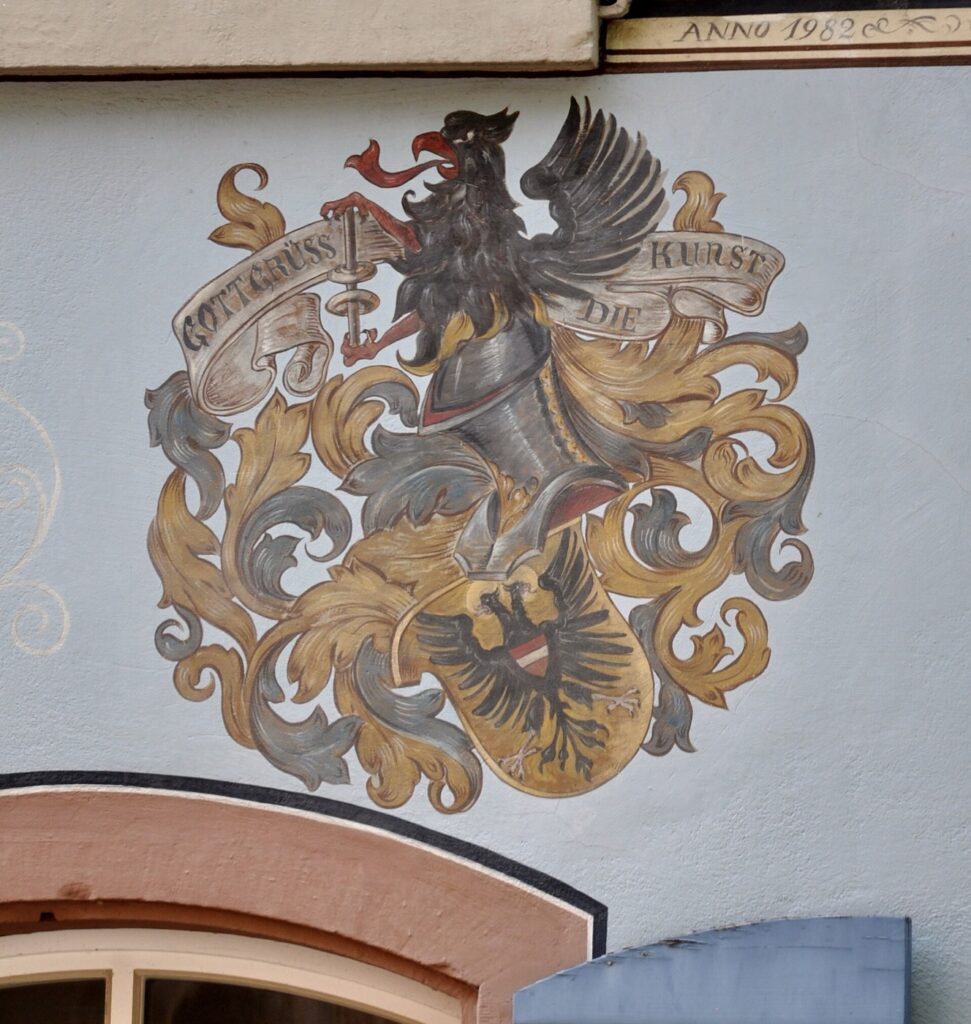
The story
Upholders of the printed word.
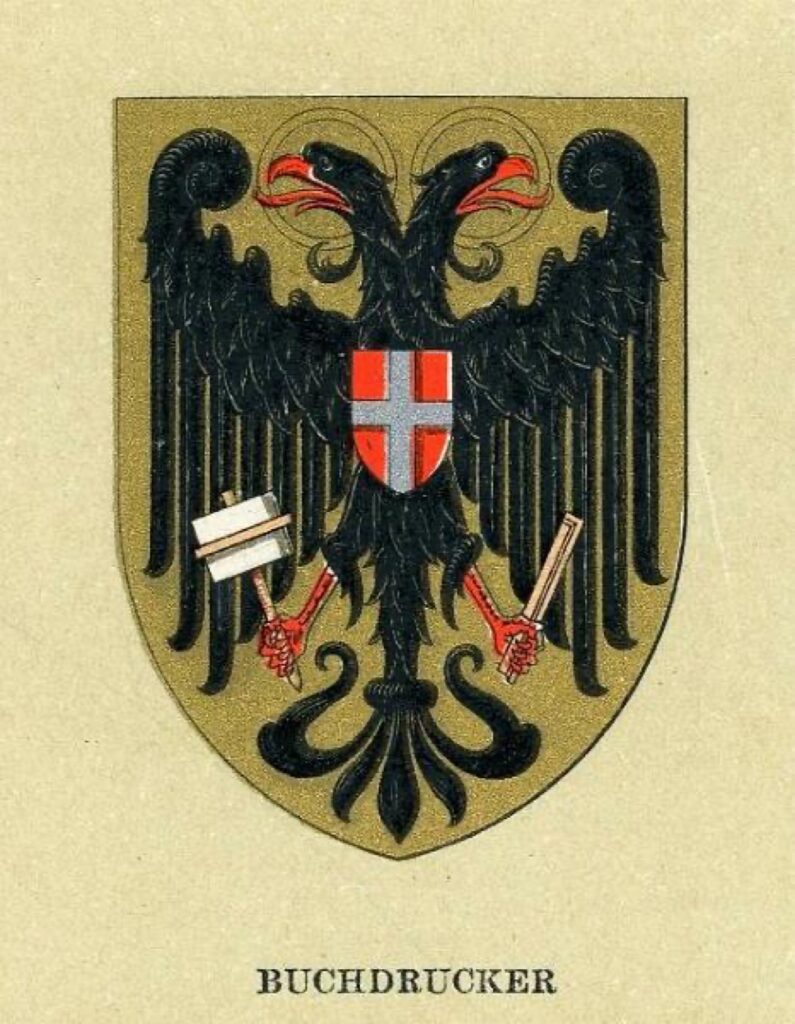
Printers’ arms from the Vienna trade guild arms by Hugo Gerard Ströhl, c. 1900. Wikimedia Commons (public domain).
The legend
An emperor’s gift
The story goes that Frederick III, crowned German king in 1440 and Holy Roman Emperor from 1452 to 1493, was so impressed by the new art of printing that he gave printers privileges usually kept for the nobility. They could carry a sword, wear gold, and bear their own coat of arms. The sword marked the printer as a gentleman and an upholder of the printed word, a craftsman worthy of honour rather than a mere labourer.
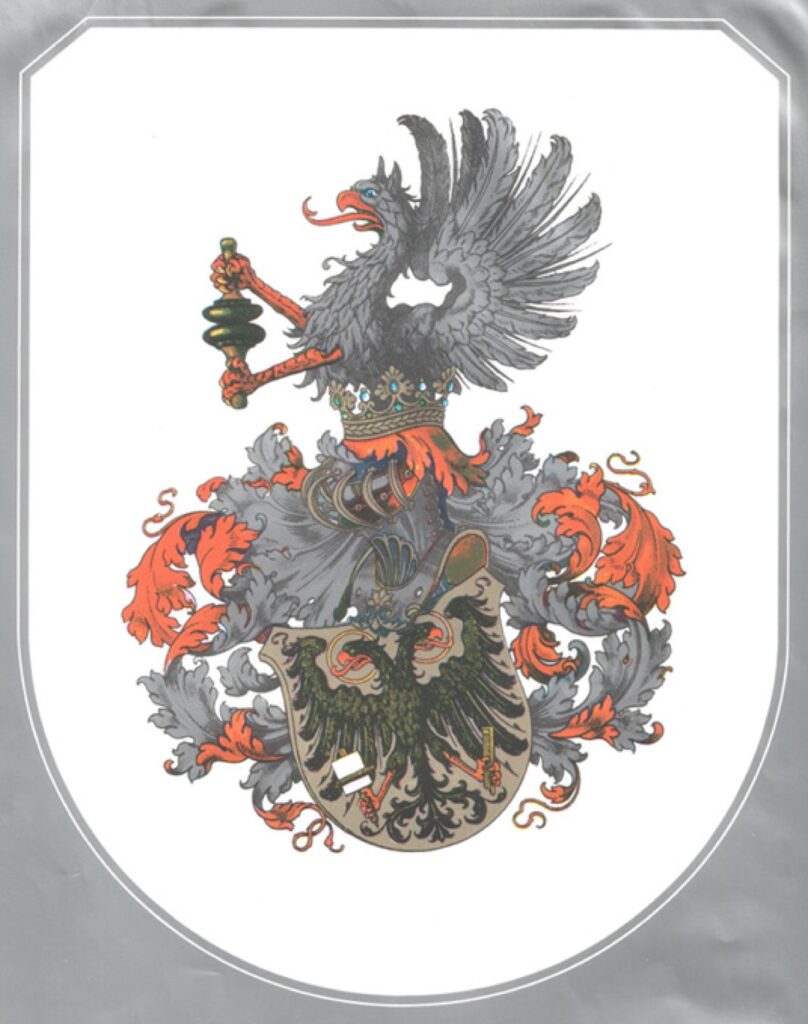
The printers’ coat of arms (Buchdruckerwappen). Wikimedia Commons (CC BY-SA 3.0).
The arms
Every part is a tool of the trade
The printers’ coat of arms shows a black double-headed eagle on a gold shield, borrowed from the imperial eagle. In one claw it holds a copy holder for the typesetter’s manuscript and in the other a composing stick, used to set type letter by letter. Above the helmet a silver griffin presses two ink balls together, the leather pads pressmen used to ink the type. The eagle stands for the compositor and the griffin for the pressman.
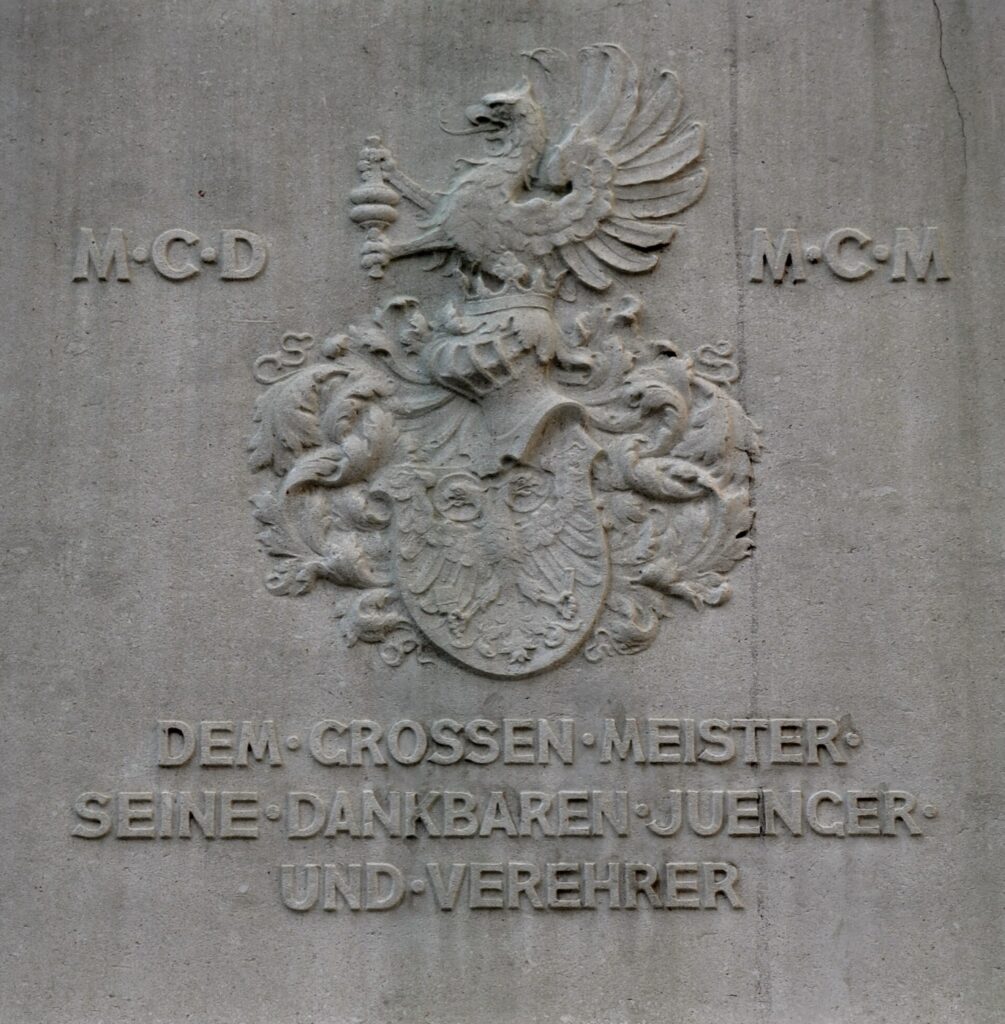
Printers’ arms on the back of the Gutenberg monument in Vienna, unveiled in 1900. Photo: Andreas Praefcke. Wikimedia Commons (public domain).
1668
Where the story comes from
No charter from Frederick III has ever been found. The tale first appears in print in 1668, in a work by the German poet Sigmund von Birken, and historians now think the arms were created in the late 1500s or 1600s, when printers wanted the same standing as older guilds. Even an 1888 German encyclopedia was careful to say the arms were only “said to have been” granted by the emperor.
The sword
Did printers really wear swords?
In some places, yes. In university towns such as Jena in Germany, printers were attached to the university and shared the students’ right to wear a sword. Printers were proud to call their work an art rather than a trade, and called themselves “black artists” and disciples of Gutenberg. The legend of the emperor’s sword was a way of saying that what printers did mattered: they kept knowledge, news and ideas alive.
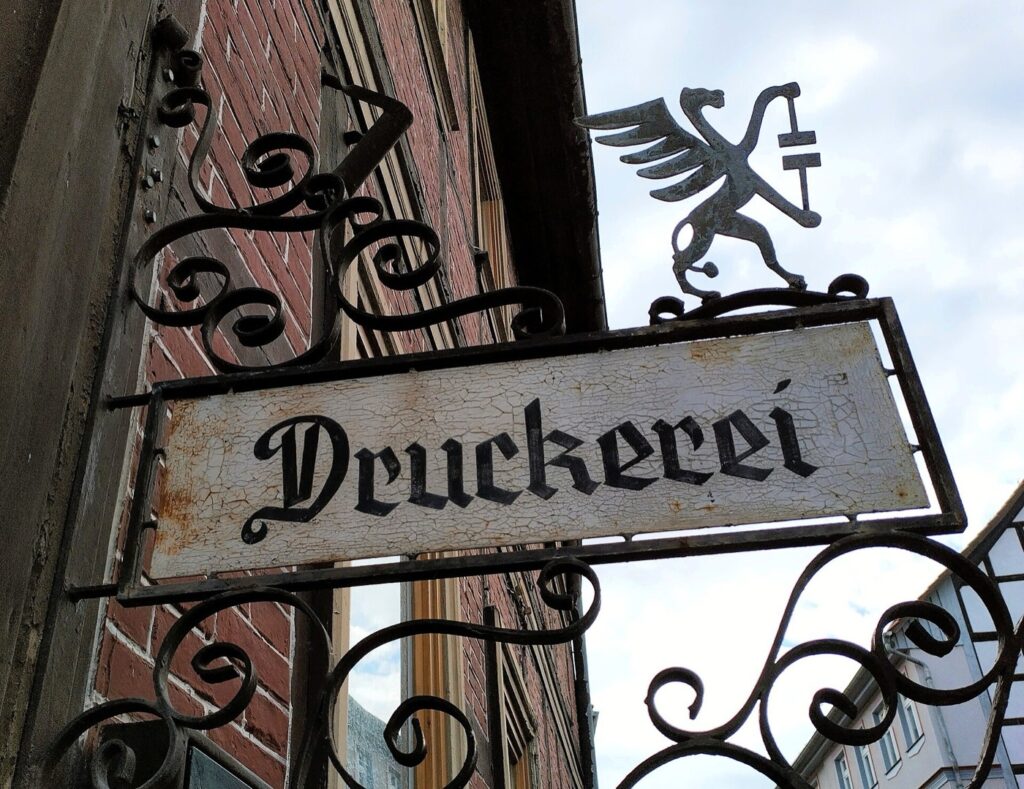
Griffin on a print shop sign in Blankenburg, Germany. Photo: Julia Roessing. Wikimedia Commons (CC0).
Today
The griffin lives on
More than 500 years after Gutenberg, the griffin with its ink balls still hangs over print shop doors, decorates guild banners and appears on printers’ signs across Germany, Austria and Switzerland. Apprentice printers there are still “gautscht” at the end of their training, dunked in a tub of water in a ceremony that goes back centuries.
Noosa
No sword, same pride
We don’t carry swords at Noosa Graphica, but we share the old printers’ pride in the printed word. Since 1977 we’ve printed Noosa’s menus, flyers, signs and stories with the same care for good paper, sharp type and true colour.
Upholding the printed word since 1977.
Send us your artwork or tell us what you need, and we’ll come back with a quote.